
Correct spring sizing and balance
A door that is too heavy for the springs strains the opener and can drop fast when released. Proper spring selection and tensioning lets the door travel evenly and stay balanced.
Serving Crestview, Florida & surrounding areas
Garage door installation in Crestview, Florida
Get a new garage door set up to match your opening, track, and hardware so it runs smooth, seals well, and stays reliable in day-to-day use.
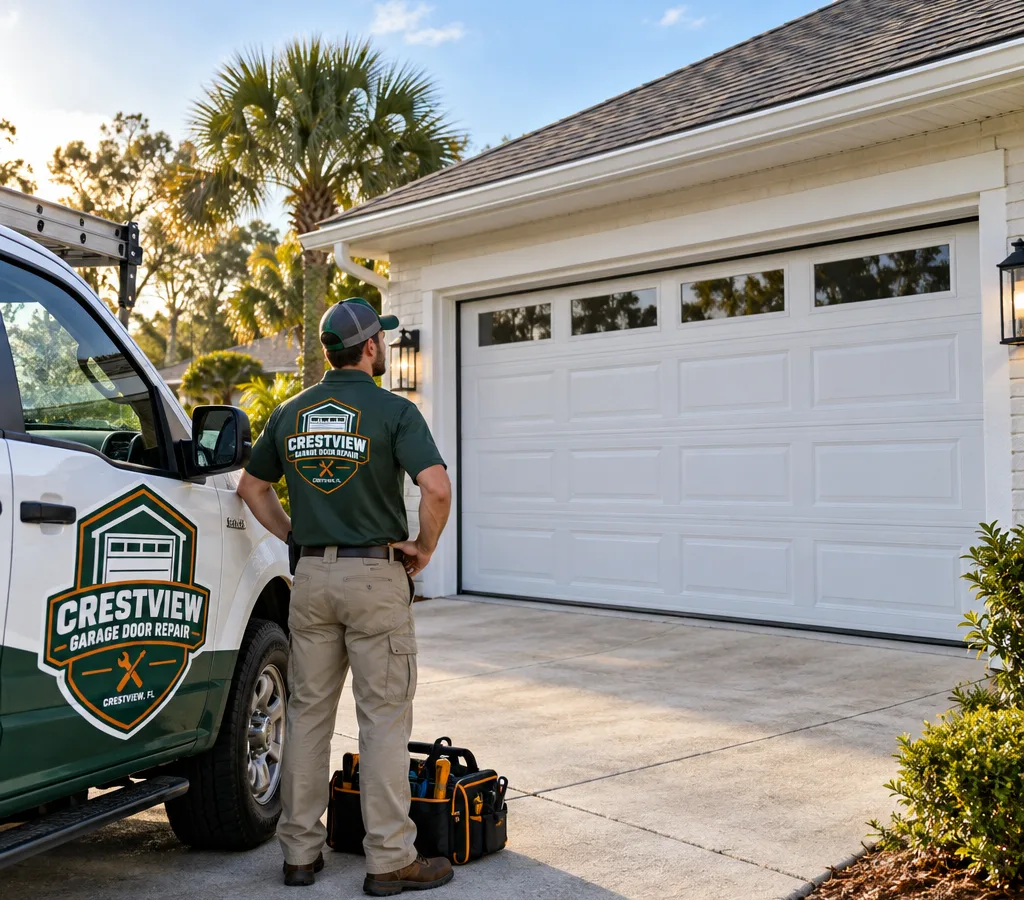
A reliable installation starts with the right fit, square track, balanced springs, even cables, and a tight perimeter seal.
New doors and replacement installations
If you searched for garage door installation Crestview FL, you are probably trying to solve one of two problems: you need a brand-new door for a garage opening that is ready for it, or you are replacing an older door that is noisy, dented, off-track, or simply does not seal and operate like it should.
Crestview Garage Door Repair installs new residential garage doors with an emphasis on correct fit and safe operation. Installation is more than hanging panels. The track has to be plumb and square, the spring system has to be sized to the door's weight, and the door needs even pressure at the floor so you do not end up with light leaking at the corners or a door that binds halfway up.
A properly installed door should:
In Crestview's hot, humid weather and heavy rain, the details matter. Gaps at the perimeter invite wind-driven water and pests, and hardware that is slightly out of alignment can start squealing and wearing fast.
Complete installation scope
Most homeowners only see the door face. The long-term reliability comes from the parts you do not think about until something binds, pops, or stops halfway.
A typical installation scope may include:
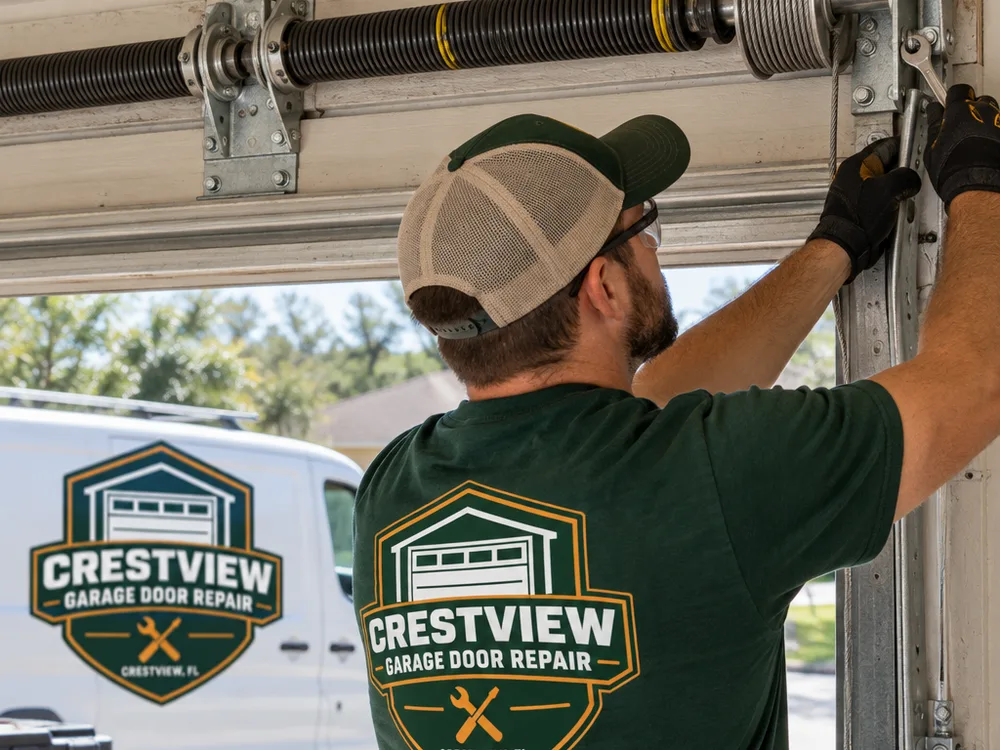
Fit, balance, alignment, and sealing
A door that is too heavy for the springs strains the opener and can drop fast when released. Proper spring selection and tensioning lets the door travel evenly and stay balanced.
If the verticals are not plumb or the horizontals are not set consistently, rollers will chatter, wear out early, and the door may drift or bind.
Uneven cables make the door rack, which shows up as one side lifting before the other or the door rubbing the jamb. Setting both sides evenly helps the door seat correctly.
Track, spring hardware, and opener supports must be anchored into framing that can handle repeated load cycles. Weak mounting is a common cause of shifting tracks and rattling.
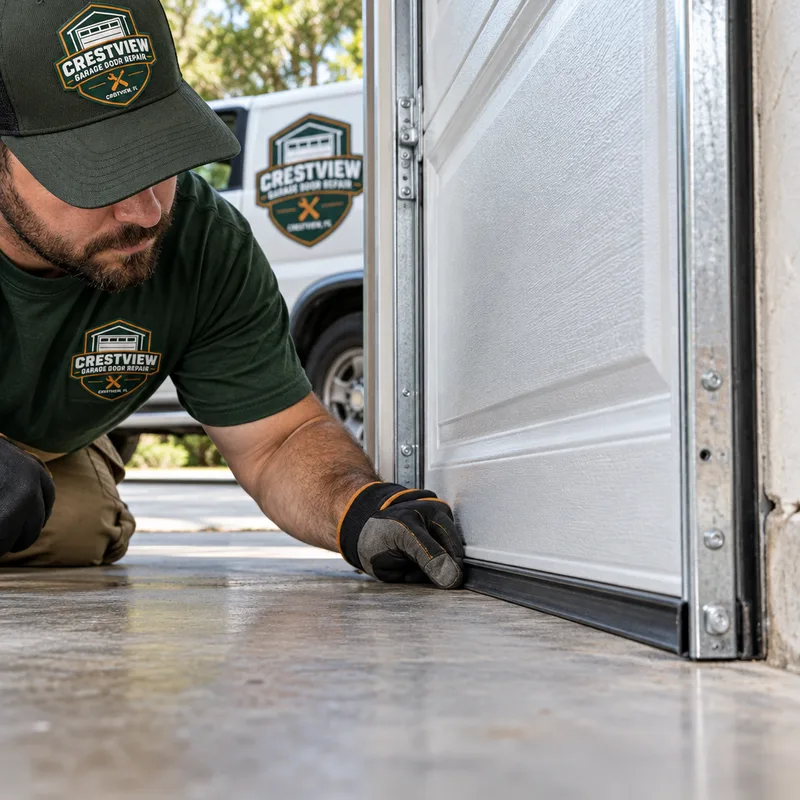
Bottom seal, jamb seal, and header seal need consistent contact. A good seal helps keep out rain splash, leaves, and insects and reduces air movement into the garage.
Five-step installation process
We start by measuring the opening and checking the space above and beside the opening for track and spring clearance. This is where issues like limited headroom or out-of-square framing show up.
Based on the door weight and the available space, we match the spring system and track configuration so the door can be balanced and the rollers have a clean travel path.
Panels, springs, and track are taken down in a controlled way, since stored spring energy and shifting sections can be hazardous when handled incorrectly.
We set tracks, hang sections, install hinges and rollers, then install and tension the springs and cables. The goal is smooth travel and an even seal at the floor.
We cycle the door, fine-tune tension and limits, and reconnect the opener if you have one. We also verify the door can be operated safely by hand if needed.
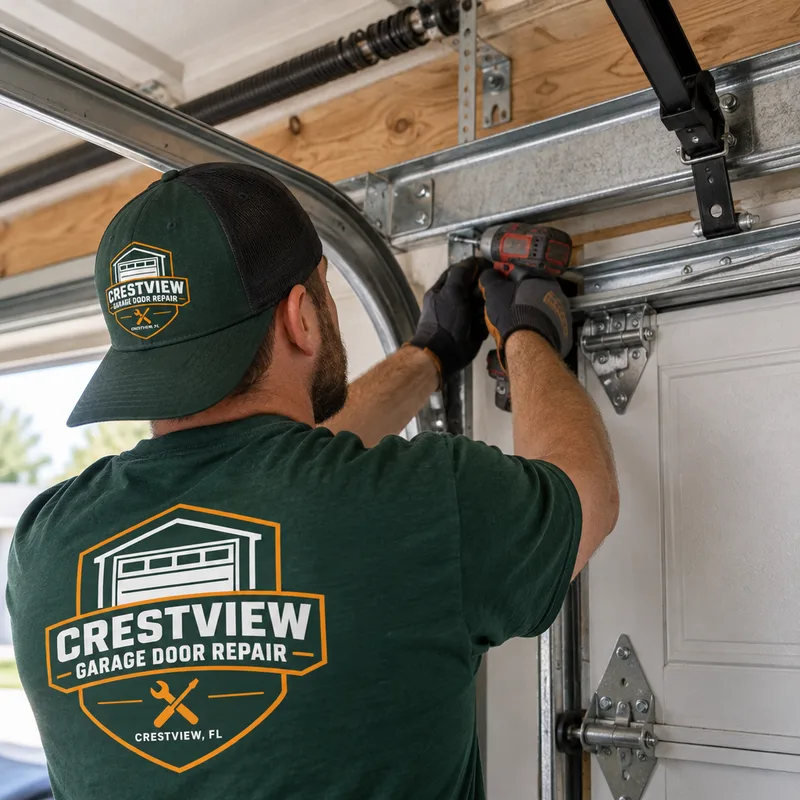
Finished installation details
Answers before installation
Most garage door installations take about half a day to a full day, depending on whether it is a simple swap or if track, springs, and mounting surfaces need changes. Replacements go faster when the opening is square and the existing setup is compatible; custom sizing, opener adjustments, or framing corrections add time.
Sometimes, but it is not a safe default. Tracks, springs, drums, and cables must match the door's size and weight, and mixing incompatible parts can lead to poor balance, loud operation, or premature wear. The right approach is to measure the opening and confirm whether the existing hardware is correctly rated and in good condition before deciding what can stay.
Not always. If the opener is properly sized, the rail and mounting are in good shape, and the new door is balanced, the opener can often be reconnected and adjusted. If the new door is heavier, or the opener struggles even after the door is balanced, replacement can make sense for reliability and safety.
An insulated steel sectional door is a common choice because it holds up well, can reduce heat transfer into the garage, and seals more consistently when paired with the right perimeter weather stripping. The best fit still depends on how the garage is used, the size of the opening, and whether you need windows, added struts, or specific wind-load options.
It can, if the issue is an uneven bottom seal, a bent door, or a door that is not closing square. If the slab itself is low in the middle or the driveway slopes toward the door, sealing alone may not solve all water intrusion, but a properly installed door with the right bottom seal and jamb seal usually improves the situation.
Yes, the spring system is the main hazard. Torsion and extension springs store significant energy, and mistakes during tensioning or hardware setup can cause sudden movement. Even beyond safety, small alignment errors can lead to a door that binds, wears out rollers, or strains the opener, so professional installation is often the most reliable path.
Tell Crestview Garage Door Repair what you are replacing (or installing new) and any issues you have noticed with the opening or opener. You will get a clear scope for the door, track, springs, and sealing so the finished install operates smoothly and closes tight.